
Why Traditional SEO Alone Is No Longer Enough in the AI Era
Your SEO dashboard can look healthy while your visibility is quietly shrinking.
By the traditional measures, everything looks fine (i.e., your rankings are stable; your organic traffic still comes in).
Then one of your best prospects opens ChatGPT and asks: "Who are the best companies to help with [the problem you solve]?"
Your business never appears.
They ask Gemini. A competitor shows up instead.
They ask Claude to compare options.
You are missing from the shortlist.
Nothing necessarily happened to your rankings. But something happened to search.
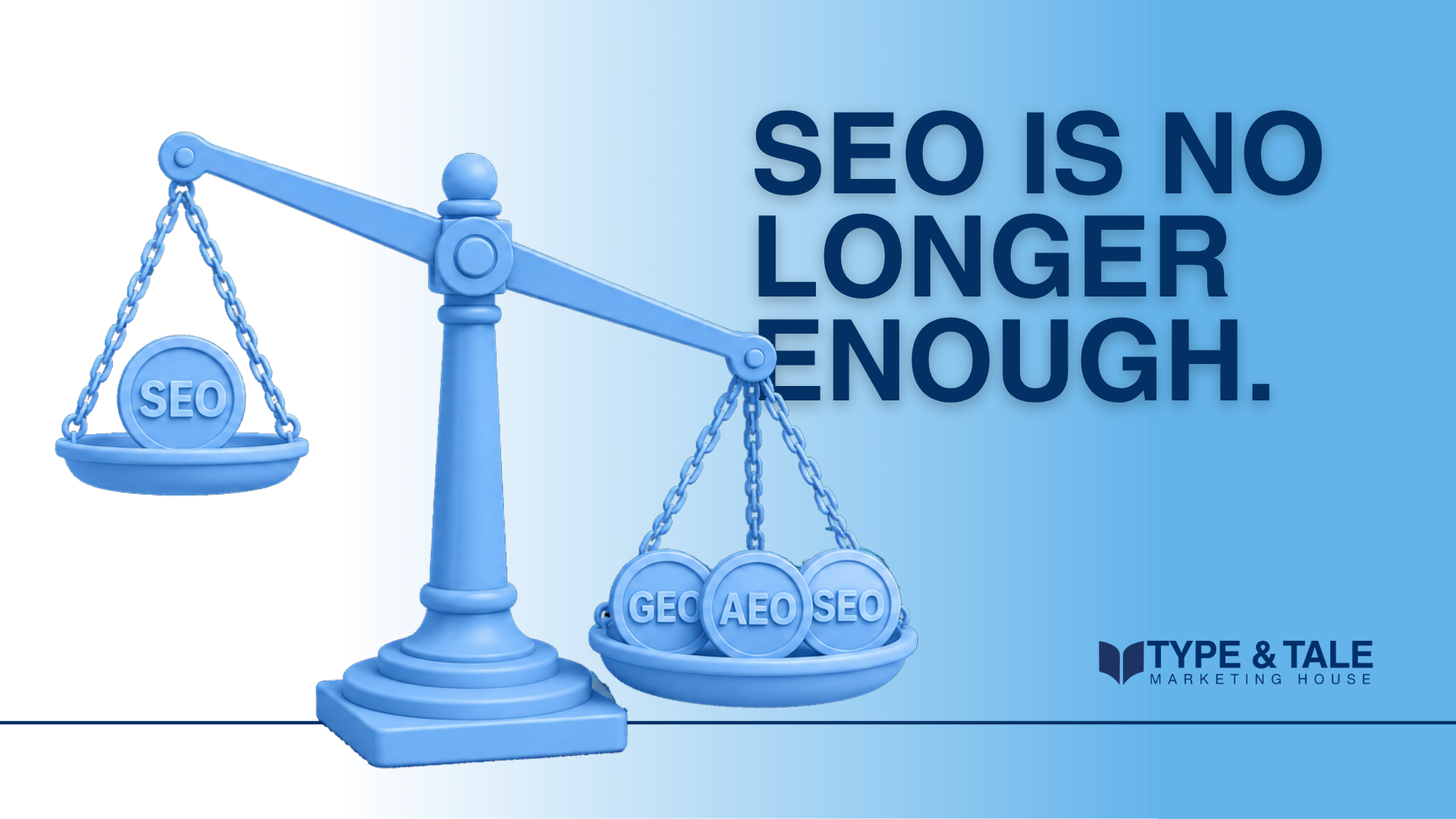
People no longer move through a neat sequence of search result → website → research → decision. AI-powered search can interpret the question, gather information, compare options, summarize findings, and help someone narrow their choices before they ever visit your website.
McKinsey found in its 2025 AI Discovery Survey that half of surveyed consumers were intentionally using AI-powered search, with use extending across discovery, comparison, recommendations, and purchase decisions.
That does not make SEO obsolete. Google explicitly says foundational SEO practices remain relevant to its generative AI experiences, including AI Overviews and AI Mode.
But it changes the finish line.
Traditional SEO helps a business get found. Modern search strategy must also help it get understood, trusted, retrieved, cited, recommended, and selected. That is the difference between competing for visibility and competing in the Selection Era.
What You’ll Learn
- Why AI isn’t replacing search — it’s changing what search does
- How ChatGPT, Gemini, Claude, and Google surface brands and information
- The six layers of modern SEO that matter beyond traditional rankings
- What executives should measure as buyers shift from search to selection
- How to improve your company’s AI visibility over the next 60 days
THE CORE CONCEPT
SEO still matters. But ranking is now the beginning of visibility — not the end of it. In the AI era, your business also has to be understood, trusted, retrieved, recommended, and selected.
AI Isn't Replacing Search. It's Changing What Search Does.
For years, the basic search journey was predictable: someone had a question, typed keywords into Google, reviewed results, clicked through, read, compared, and decided.
SEO focused on getting your website into that journey early enough to earn the click.
That job still matters. But the journey is changing.
Traditional search helped people find information
The classic model looked like this:
The search engine's primary job was to point people toward information.
Your job was to appear high enough in the results to earn the click.
That created a complete measurement system around rankings, impressions, click-through rates, backlinks, organic sessions, and conversions.
Useful but increasingly incomplete metrics.
AI compresses the research process
An AI-assisted journey can look different:
ChatGPT Search can search the web and provide timely answers with links to sources.
Claude can search the web, analyze relevant results, and provide citations to supporting sources.
Google's AI search experiences generate responses while surfacing supporting links from its search systems. Google says these experiences are rooted in its existing ranking and quality systems.
Gemini can also use Google Search as a grounding source in supported experiences and developer implementations.
The important part is not the technical difference between every system.
It is what happens to the buyer.
They can ask: "What kind of solution do I need?" Then: "What should I look for?" Then: "What companies specialize in this?" Then: "Compare these three."
One interface can help move them through several stages of the buying process.
The search experience is becoming part research assistant, part translator, part comparison tool.
The real shift is from visibility to selection
Traditional SEO asks: Can they find us?
The Selection Era adds another question: When they compare their options, do we get chosen?
A number-one ranking is visibility.
Being named as one of three relevant options is selection.
A page receiving thousands of impressions is visibility.
An AI system accurately explaining that your company specializes in the exact problem the buyer described is something more.
That is why SEO, GEO, and AEO should not be treated as competing trends.
They solve different pieces of a changing search environment.
SEO helps make information discoverable.
AEO helps make information answerable.
GEO focuses attention on whether generative systems can understand and surface that information.
The destination is not a ranking.
The destination is relevance at the moment a choice gets made.
How AI Systems Decide What to Surface
There is no universal "AI recommendation algorithm."
ChatGPT, Google, Gemini, and Claude are different systems using different models, retrieval approaches, indexes, and ranking mechanisms. Their exact selection processes are not fully public.
Be wary of anyone offering a secret list of ten signals guaranteed to make ChatGPT recommend your company.
That list does not exist.
What we can identify are conditions that repeatedly matter when machines have to retrieve, interpret, and present information.
First, they need to understand what your business is
Look through five pages on the average company's website, and you may find five different descriptions of what the business does.
The homepage says one thing. The service page says something else. The LinkedIn profile uses an older positioning statement. Google Business Profile puts the company into a broad category. A founder interview describes the company differently again.
Humans can sometimes work around that inconsistency.
Machines have to interpret it.
If your information is vague, inconsistent, or overly broad, you create unnecessary ambiguity around basic questions:
Who do you help?
What do you help them do?
What problems are you qualified to solve?
When should someone consider you?
What category do you belong to?
Where do you operate?
What makes your approach different?
If your own website cannot clearly explain your business, AI has no reason to magically make it clearer.
This is where AI visibility becomes a messaging issue.
If your own website cannot clearly explain your business, AI has no reason to magically make it clearer.
That is why messaging clarity belongs inside a modern search strategy.
You can fix title tags. You can add schema. You can build backlinks.
But technical optimization cannot rescue an unclear answer to: "Why would someone choose you?"
Then they need evidence that the answer can be trusted
Understanding is not the same as trusting.
Google continues to emphasize useful, reliable, people-first content and specifically advises site owners to create distinctive, expert-led material rather than commodity content produced simply to gain search visibility.
The same issue matters whenever an AI system chooses information to support an answer.
Is this claim supported? Is the source relevant? Does other information corroborate it? Is there evidence of real expertise? Is the information current? Can the source be identified?
No single trust signal guarantees selection.
But a business with detailed expertise, useful original material, clear authorship, citations, reviews, third-party mentions, case evidence, and consistent company information gives both buyers and retrieval systems more to work with.
That is why AI trust signals matter.
Finally, you have to match the question
This may be the most overlooked part. Businesses tend to optimize around what they call themselves.
Buyers search around what they are experiencing.
Those are not always the same thing. A company might optimize for: "B2B marketing strategy."
The buyer may ask: "We have traffic, but the leads are bad. Should we spend more on ads or fix our website first?"
A founder does not wake up wanting GEO. Something happened. Competitors started appearing in ChatGPT. Referral traffic changed. A board member asked about AI visibility. A prospect said they found a competitor through an AI tool.
That moment creates the search.
Understanding those moments helps you create content around the questions buyers actually ask instead of the terms marketers like to target.
For a deeper look, see how ChatGPT finds and recommends businesses.
The Six Layers of Modern SEO
Traditional SEO is not something we throw away.
It is the foundation beneath a larger visibility system.
A useful way to think about modern SEO is through six layers.
Technical Discoverability
Can search engines and AI systems access your information? Crawlability, indexing, site structure, internal links, mobile usability, and structured data still form the foundation.
Search Relevance
Does your content match what the buyer is actually looking for? Keywords still matter. So do search intent, topic depth, context, and location.
Answerability
Can your content answer the question clearly? Direct definitions, useful headings, comparisons, FAQs, and concise explanations make information easier for both people and machines to interpret.
Entity & Message Clarity
Can someone accurately explain who you help, what problem you solve, when you are relevant, and why your approach is different? Vague positioning creates vague signals.
Authority & Corroboration
Is there evidence supporting what you claim? Original expertise, case studies, credible citations, reviews, authorship, and third-party mentions make your business easier to trust.
Selection & AI Visibility
Do you actually appear when the buyer asks? Track whether AI systems mention, cite, accurately describe, and recommend your business — and who gets selected instead.
In short: modern SEO has six jobs—make your business accessible, relevant, answerable, understandable, trustworthy, and selectable.
What Executives Should Actually Measure
Do not throw away your SEO dashboard. Instead, you need to expand it.
Leadership should still track:
Rankings
Search impressions
Organic traffic
Qualified leads
Conversions
Revenue
Those numbers tell you useful things.
If buyers are researching through AI systems, the leadership team needs visibility into that environment too.
That creates several new measurements worth understanding.
Are we visible for the right buyer questions?
Not vanity prompts. But real questions.
"Who are the top agencies?" may be interesting.
But it may tell you less than: "Our service company gets traffic but most leads are price shoppers. What should we fix?"
The second question contains intent. It reveals the problem. It creates the moment where a buyer could encounter your expertise.
Are we being recommended?
Being mentioned and being recommended are different.
An AI system could identify your company as an option without suggesting that you are particularly relevant.
Track the difference.
Are we being cited?
If the platform provides source citations, how often does your content appear as supporting evidence for questions you care about?
That gives you a signal of whether your information is useful inside the research process.
Are we being described correctly?
This may be the most important question.
Visibility without clarity can work against you.
If an AI system repeatedly describes your company incorrectly, associates it with the wrong service, or misses your strongest differentiator, simply appearing is not enough.
Who is being selected instead?
AI visibility should never be measured in isolation.
If you are absent, who appears?
Why might their information be easier to retrieve?
What content do they have that you do not?
Which third-party sources support them?
What questions are they answering more clearly?
The purpose is not to obsess over AI scorecards.
It is to identify where the buyer's information environment is favoring someone else.
Executive teams should continue measuring rankings and organic traffic, but they should also track whether AI systems mention, cite, accurately describe, and recommend their brand for real buyer questions.
A Practical 60-Day Plan to Improve Your AI Visibility
You do not need to rebuild your marketing department around GEO this quarter.
THE 60-DAY RULE
Don’t start by publishing more content. Start by finding out what search engines, AI systems, and buyers currently understand about your business — then fix the gaps.
You need a baseline. A point of view. And a disciplined improvement loop.
Here is where to begin.
Days 1–10: Establish the Baseline
Start with what already exists.
Audit:
Organic search performance
Indexing and crawlability
Important service and solution pages
Topic coverage
Internal links
Company descriptions across major profiles
Current AI visibility
Then build a prompt set.
Use 25–50 questions your real buyer could reasonably ask during research.
Include different stages.
Problem discovery: "Why are our leads getting worse even though traffic is growing?"
Solution research: "What should a service business fix before increasing its ad budget?"
Comparison: "What's the difference between fixing positioning and hiring an SEO agency?"
Provider discovery: "What companies help established service businesses clarify their marketing message?"
Test the same core questions across the AI platforms most relevant to your buyers.
Record what happens.
Do you appear? Are you cited? Are you recommended? Who appears instead? Is the description accurate?
You now have a baseline.
Days 11–20: Clarify Buyer → Problem → Moment
Before publishing more content, clarify the message underneath it.
Buyer: Who is this for?
Problem: What are they trying to fix?
Moment: What happened that made fixing it matter now?
Then look at your major pages.
Is the buyer obvious? Is the problem explicit? Does your site explain the moment when your service becomes relevant?
Or does everything fall back on generic language?
"Grow your business." "Reach your goals." "Transform your marketing."
AI cannot rescue language that asks everyone else to do the interpretation.
Neither can SEO.
Days 21–30: Repair the Architecture
Now strengthen the environment surrounding the message.
Review:
Key service pages
Important topic hubs
Internal linking
Company information
Author information
Structured data
Relevant FAQs
Crawlability
Indexing
Build deeper topic relationships instead of publishing isolated articles.
A strong GEO-ready website should make it easy to understand how your areas of expertise connect.
One good page is useful.
A coherent body of expertise is harder to ignore.
Days 31–40: Publish Something Worth Selecting
Do not ask: "What else should we publish?"
Ask: "What question are we currently failing to answer?"
Look at the gaps from your baseline testing.
Then create the missing resource.
Maybe it is:
A definition
A comparison
A buyer's guide
A detailed FAQ
A case study
An original framework
A point-of-view article
First-party research
Do not create another article that says what the first ten results already say.
Google's current guidance for generative search specifically recommends unique, valuable, non-commodity content rather than repackaging common information. citeturn696085search0
Have something to add.
Days 41–50: Strengthen the Proof
Now look outside your own website.
Where can your expertise be confirmed?
Improve:
Case evidence
Reviews
Expert authorship
Company profiles
Credible citations
Third-party coverage
Industry mentions
Partnerships
Public examples of your work
Do not manufacture mentions for the sake of manufacturing signals. Google explicitly warns against chasing inauthentic mentions as an AI-search tactic.
Build evidence because evidence makes the business easier to trust.
Days 51–60: Run the Test Again
Return to the original prompt set.
Do not change the questions just because you dislike the results.
Run them again.
Compare:
Visibility
Mentions
Recommendations
Citations
Accuracy
Competitor frequency
Some results may change. Some may not.
You are not trying to prove that 60 days guarantees AI recommendations.
You are creating a feedback loop.
Find the gaps. Improve the information. Strengthen the proof. Test again.
AI visibility should be managed as an ongoing process: test, clarify, improve, validate, repeat.
The Finish Line Has Changed
SEO solved an important problem: Can people find us?
Keep solving it.
But search now asks more.
Can a buyer understand you? Can a search engine interpret you? Can an AI system retrieve useful information about you? Can another source confirm what you claim? Can someone quickly understand when your company is the right choice? Do you make the shortlist?
That is the Selection Era.
The mistake would be to respond by chasing every new optimization acronym that appears.
Add an llms.txt file. Rewrite every paragraph into an "AI chunk." Stuff more FAQs onto every page. Publish 100 AI-written articles.
Except Google itself is now telling site owners that many special generative-search "hacks" are unnecessary for its search experiences.
Its advice keeps returning to the same place: strong technical foundations, useful original content, accessibility, and clear information.
That should tell us something.
The technology changed.
The need for clarity did not.
In fact, clarity became more valuable.
Because now you are not only asking a distracted buyer to understand your company.
Machines are interpreting you on their behalf.
The best businesses in the AI era will not merely be easy to find. They will be easy to understand.
SEO earns visibility.
Clarity helps turn that visibility into selection.
Do You Know What AI Says About Your Business?
Before you publish another 50 articles or chase the latest GEO tactic, find out whether buyers, search engines, and AI systems can clearly understand what your company does, who it helps, and why it should be selected.
If the answer is unclear, start by getting clear on your message.
Do you know what AI says about your business?
Before publishing more content or chasing another GEO tactic, find out whether search engines, AI systems, and buyers can clearly understand what you do, who you help, and why your business should be selected.
IMPROVE YOUR AI VISIBILITYFrequently Asked Questions
-
Yes. Traditional SEO remains foundational to online visibility. Google specifically says its core SEO best practices continue to apply to generative experiences such as AI Overviews and AI Mode. The change is that rankings and clicks are no longer the only forms of visibility businesses should monitor. citeturn696085search0
-
AI is better understood as reshaping search than simply replacing it. Google itself has added generative AI experiences to Search, while platforms such as ChatGPT and Claude can search the web and synthesize information into conversational responses with sources. citeturn696085search1turn113941search1turn696085search4
-
SEO focuses on improving visibility in search. GEO, or generative engine optimization, focuses on visibility within generative AI experiences. AEO, or answer engine optimization, focuses on making content useful for direct answers. The disciplines overlap because each depends on clear, accessible, relevant, trustworthy information. Read the full SEO vs. GEO vs. AEO comparison.
-
OpenAI does not publish a simple checklist that guarantees ChatGPT recommendations. When ChatGPT uses web search, it can retrieve current information and provide links to supporting sources. For businesses, the practical goal is to make information about the company clear, relevant, credible, accessible, and supported across the web. citeturn696085search1turn696085search12
-
Test real questions your buyers might ask across relevant AI platforms. Look at whether your company appears, how it is described, which services are associated with it, whether it is recommended, and which competitors appear instead. If the descriptions are vague or incorrect, review the consistency and clarity of your website, profiles, third-party mentions, and core positioning.
-
Continue tracking organic rankings, qualified traffic, leads, and revenue. Add AI visibility metrics such as mention rate, recommendation rate, citation rate, brand-description accuracy, competitor share of voice, and performance across high-value buyer prompts.
-
There is no guaranteed timeline. AI visibility can depend on crawlability, search indexing, content quality, authority, third-party information, competition, query wording, platform behavior, and how frequently source information changes. Treat AI visibility as an ongoing measurement and improvement process rather than a one-time optimization project.

Author: Noah Swanson
Noah Swanson is the founder and Chief Content Officer of Type and Tale.