
How AI Chooses What to Cite
You can write a great article and still get ignored by AI.
It stings, but it makes sense.
Because AI systems don’t reward “good enough” the way a human reader might, they’re built to retrieve, filter, compress, and answer fast.
So the page that gets cited is usually not the page with the prettiest prose. It’s the page that’s easiest to retrieve, easiest to trust, and easiest to quote.
Google says its AI search features generate snapshots with links to explore more on the web, and Microsoft’s guidance for inclusion in AI search answers stresses clarity, chunking, and visible answers over buried information.
In old-school search, the fight was for rank. In AI search, the fight is for selection.
That’s why this topic matters for brands trying to win in Generative Engine Optimization. If your content isn’t built for retrieval and trust, you can lose visibility even when your SEO is still solid.
Type and Tale explains that shift in The Future of Search: Why GEO Is the Next SEO, Embedding Optimization: How AI Reads and Retrieves Your Content, and AI Content Trust Signals: How Generative Engines Decide What to Cite.
So, if you’re asking, “How do I get cited by AI and Large Language Models (LLM),” you’re in the right place.
This article will answer your question and provide a clear plan for you.
The simple answer: AI does not “pick sources” like a person does
AI usually chooses what to cite through retrieval systems, ranking signals, and trust cues.
A human editor might read ten pieces, weigh the nuance, and choose one because it feels most honest. AI systems do something more mechanical.
They retrieve possible sources, score them for relevance and safety, use them to generate an answer, and then decide which ones are worth showing as citations.
Anthropic’s explanation of contextual retrieval highlights how much the retrieval step shapes downstream answer quality, and Microsoft’s AI search guidance makes the same point from a content angle: pages that are clear, direct, and chunk-friendly are easier to include.
That matters because a lot of marketers still think, “If I publish the best article, AI will naturally cite it.”
But not quite.
The better bet is this: if you publish the clearest, safest, best-supported answer in a format AI can lift cleanly, your odds go up.
Traditional SEO gets you on the page. Large Language Model Optimization (LLMO) gets you into the answer.
What actually happens before an AI citation appears

Let’s make this simple.
Step 1: The system retrieves possible sources
Before an AI tool cites anything, it has to find candidates. That can happen through web search, an index, a retrieval system, or some blend of those.
Google says AI features in Search use content from across the web.
OpenAI’s web search documentation explains that sourced answers come from web retrieval before response generation.
Anthropic’s retrieval guidance shows how better retrieval sharply improves final answer quality.
This is the first reason some content never gets cited: it never really makes the shortlist.
If your page is thin, vague, buried in weak architecture, or disconnected from the broader topic, it may not even get pulled into the candidate set.
This is where embedding optimization comes into play: It’s based on structure, micro-answers, clusters, schema, and provenance.
Step 2: It ranks those sources by likely usefulness
Once a page is retrieved as a possible candidate, the system has to decide which ones look most useful.
This is where clarity, directness, topical match, freshness, and trust signals start doing real work.
Microsoft warns against long walls of text and hiding key answers in tabs or expandable menus because AI systems may miss or struggle to separate the useful chunk. Google’s guidance for AI features similarly points site owners back to creating helpful, accessible content that works well for search features.
Think of it like this: if AI is in a hurry, the clean answer beats the clever answer.
Step 3: It generates an answer from the strongest matches
After ranking comes synthesis.
The model uses the strongest retrieved material to assemble a response. Sometimes that response includes citations. Sometimes it does not. Sometimes it cites one source. Sometimes several. Anthropic has described citation-oriented research systems, and OpenAI’s web search docs describe sourced responses grounded in retrieved web information.
This is why citation is not the same thing as ranking.
A page can rank well and still not get cited if a competing source has a tighter definition, clearer wording, better provenance, or a chunk that maps more cleanly to the exact prompt.
Step 4: It decides which sources are worth showing
Not every source used in generation gets shown to the user.
The system may display the clearest supporting pages, the safest ones to attribute, or the ones that best match the answer it gave.
In practical terms, that means your page needs to do two jobs at once: help shape the answer and deserve visible credit.
That is a big reason to care about Provenance Tagging and Trust. If your page gives the machine stronger proof of who wrote it, when it was published, what it cites, and how it should be understood, you make attribution easier, not just retrieval.
The biggest factors that influence what AI cites

Clear answers to clear questions
If the prompt is simple, the source that answers it simply has an edge.
That sounds obvious. It is also where many pages fail. They are written to sound smart, not to answer the question. AI systems are not impressed by throat-clearing. They want answerable units.
For deeper understanding, check out How to Write Content for Prompts, Not Just Keywords – it explains how to create content around prompt patterns and real user questions, not just isolated keyword targets.
Authority and expertise signals
AI does not “believe” a page because the headline sounds confident. It looks for patterns that suggest the source is credible.
That includes named authors, bios, citations, consistent topic coverage, and a real brand footprint. Google’s guidance on AI-related search features still points site owners back to helpful, people-first content, and Type and Tale’s newer trust-signals post frames authority as something inferred from reinforcing cues rather than declared in the headline.
For example, these two blog posts – LLMO: Large Language Model Optimization Explained and The Future of Search: Why GEO Is the Next SEO – link to Type and Tale Marketing Guides, providing topical coherence instead of acting like standalone articles.
Freshness and relevance
Not every topic needs the newest source. But if the subject changes fast, newer sources often get an advantage.
AI search behavior, product guidance, and platform features change quickly. That means a post on “how AI chooses what to cite” should not lean only on old assumptions. Google’s AI features documentation and Microsoft’s AI search inclusion guidance show why recency matters.
Structure and readability
This is huge.
Walls of text are hard for humans. They are also hard for systems trying to extract a clean answer. Microsoft explicitly advises against long walls of text and hidden key information. That guidance lines up perfectly with Type and Tale’s work on snippet engineering, prompt-oriented writing, and embedding optimization.
Original facts, examples, and useful framing
If your page adds nothing, AI has no reason to favor it.
A recycled article can still rank in search. It is harder for it to become a preferred citation if stronger pages already say the same thing with more authority or better examples. Original research, a sharp analogy, a concise comparison table, or a concrete example gives the system something distinct to lift.
Provenance and trust metadata
This is where many brands are still asleep.
Provenance tagging, authorship, dates, schema, and source attribution all help a machine decide whether your content is safe to trust. Type and Tale’s provenance post ties this to C2PA, JSON-LD, metadata hygiene, and ownership transparency, while positioning provenance as a trust layer for both humans and AI systems.
Why some great content never gets cited
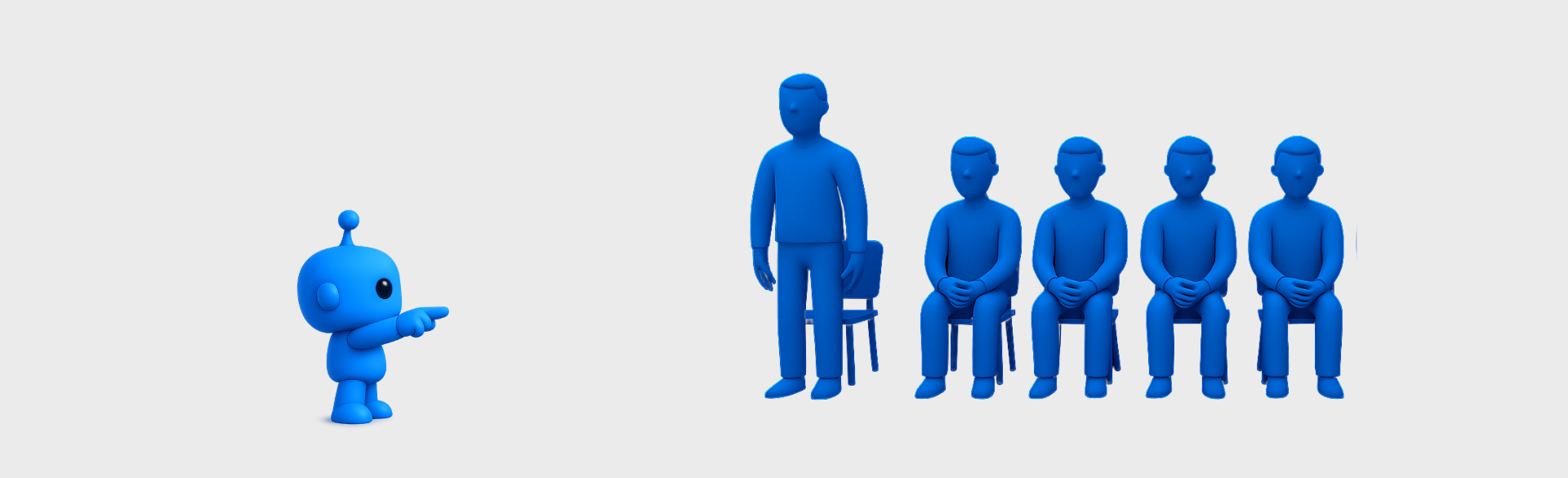
Let’s be blunt: A lot of “great” content is great for human admiration and bad for machine use.
Sometimes the answer comes too late. Sometimes the page is too fluffy. Sometimes the byline is weak or missing. Sometimes the article says nothing new. Sometimes the structure is so dense the useful part is buried like a toy at the bottom of a cereal box.
That is why a smaller brand can beat a bigger one.
If Brand A publishes a polished, vague article and Brand B publishes a direct, well-sourced, clearly structured answer with a named author and strong internal links, Brand B may get the citation.
That is not unfair. It is mechanical.
Why one brand gets cited and another one does not
Picture two articles answering the same question: “How does AI decide what to cite?”
The first article opens with a meandering intro about the future of technology. The definition does not appear until paragraph six. There is no byline. No citations. No last-updated date. No FAQ. No internal links to related topic pages.
The second article opens like this:
AI usually decides what to cite by retrieving relevant sources, ranking them for trust and usefulness, and then showing the clearest supporting pages alongside the answer.
Now we are talking.
That second article is easier to extract. Easier to quote. Easier to trust. Easier to map to the prompt.
Add a named author. Add a recent publish date. Add references. Add a cluster of related pages on GEO, LLMO, provenance, and prompt-based writing. Suddenly the page does not just answer the question. It looks like the kind of page a system can safely stand behind.
How citation behavior differs across platforms
Different AI systems can cite different sources because their retrieval setups, ranking logic, interface design, and safety choices are not identical.
Microsoft has published guidance for inclusion in AI search answers, Google has separate guidance for AI features in Search, Anthropic has written publicly about retrieval quality, and OpenAI’s web search documentation explains sourced answers grounded in retrieved web results.
That means the same prompt may produce different citations in ChatGPT, Perplexity, Gemini, or AI Overviews.
So what do you do with that?
Do not optimize for one machine trick. Optimize for broad citation fitness.
That means:
clear answers,
visible trust signals,
clean structure,
topical depth,
fresh updates,
and support from related pages.
Those are cross-platform advantages.

How to increase your odds of being cited by AI
Here is the practical part.
Put the answer near the top
Do not hide the core definition. Lead with it.
Write snippet-ready sentences
Two or three clean sentences at the top of a section can do more for AI visibility than ten stylish paragraphs.
Add real provenance
Use a byline. Add credentials. Show published and updated dates. Cite strong sources. Link to them naturally.
Use strong headings and Q&A formatting
A heading that mirrors the prompt gives the system an easier match.
Build topic depth, not isolated posts
A lone article is a leaf. A connected content cluster is a branch.
That is why this post should point readers toward The Future of Search: Why GEO Is the Next SEO, Embedding Optimization: How AI Reads and Retrieves Your Content, How to Write Content for Prompts, Not Just Keywords, LLMO: Large Language Model Optimization Explained, and Provenance Tagging and Trust: How to Build AI-Friendly Authority. That internal web of pages makes the site easier for both humans and machines to understand.
Refresh aging content
If the topic moves, the post should move too.
It’s important your content stays relevant and up to date.
Test prompts in real tools
If you are not checking whether your brand appears in AI answers, you are guessing. Type and Tale’s source docs and posts repeatedly point to manual prompt testing plus emerging AI visibility tools as part of the workflow.
What this means for SEO, GEO, and content strategy
The goal is no longer just to rank. The goal is to become the source AI trusts enough to quote.
SEO is still the floor. You still need crawlable pages, topic relevance, strong architecture, and helpful content.
But GEO adds another layer. Now you also need citation fitness.
Can the machine find you?
Can it understand you?
Can it trust you?
Can it lift a clean answer?
Can it safely show your page as a source?
That is the real game.
And it is exactly where Type and Tale should lean in. The company already has the pieces: a Generative Engine Optimization service page, a growing GEO/LLMO topic cluster, trust-focused thought leadership, and a guide hub that can support broader authority. This post should act as a bridge between those assets and the question more marketers are starting to ask: “Why does AI cite some brands and skip others?”
That question is not going away.
If anything, it is becoming the new version of “Why don’t I rank?”
Only now the answer is tougher, because the issue is not just visibility. It is selection.
That is the opportunity too.
Brands that learn how AI chooses what to cite can stop publishing content that merely exists and start publishing content that gets used.
And content that gets used gets remembered.
Content that gets remembered gets cited.
That is a much better game to win.
FAQ
How does AI decide what sources to cite?
AI usually retrieves a set of possible sources, ranks them for relevance and trust, generates an answer from the strongest matches, and then shows the clearest supporting sources as citations when the product supports citation display.
Does AI always cite the best source?
No. It often cites the clearest, safest, and most retrievable source. The “best” article can lose if the answer is buried, the trust signals are weak, or the structure is hard to extract.
Does schema help AI choose citations?
Schema does not guarantee citations, but it can help systems understand page type, authorship, FAQs, and other context. It is one trust-and-clarity signal among several.
Why does AI cite competitors instead of my site?
Usually because their content is easier to retrieve, easier to quote, more clearly attributed, or part of a stronger topic cluster. Sometimes they are simply more direct.
Can a small business get cited by AI?
Yes. Smaller brands can win citations if they publish clear, authoritative, well-structured content with strong trust signals and real topical depth.
Reference list
Google Search Central. AI features and your website.
Google. Find information in faster & easier ways with AI Overviews in Google Search.
Google. Google Search’s guidance about AI-generated content.
Microsoft Advertising. Optimizing Your Content for Inclusion in AI Search Answers.
Anthropic. Contextual Retrieval in AI Systems.
Anthropic. How we built our multi-agent research system.
OpenAI. Web search | OpenAI API.
Type and Tale. Generative Engine Optimization.
Type and Tale. AI Content Trust Signals: How Generative Engines Decide What to Cite.
Type and Tale. LLMO: Large Language Model Optimization Explained.
Type and Tale. The Future of Search: Why GEO Is the Next SEO.
Type and Tale. Embedding Optimization: How AI Reads and Retrieves Your Content.
Type and Tale. How to Write Content for Prompts, Not Just Keywords.
Type and Tale. Provenance Tagging and Trust: How to Build AI-Friendly Authority.

Author: Noah Swanson
Noah Swanson is the founder and Chief Content Officer of Type and Tale.