
By now, we’ve all used ChatGPT to help write an email, summarize a document, or explain something complicated.
But there's another side to these tools that most business owners haven't explored.
Instead of asking AI how to do something, what if you could ask it to actually do it?
Not just explain how to audit a website. Inspect the website files, identify technical problems, and prepare fixes.
Not just describe how to automate a report. Write the script, process the data, and generate the report.
That's where OpenAI's Codex and Anthropic's Claude Code come in.
The question isn't simply which one is smarter.
It's which one can help you get the right work done.
YOUR GUIDE TO AI AGENTS
What You'll Learn
Before choosing a tool, understand what it can actually do for your business.
The difference: How Codex and Claude Code compare—and how agents differ from chatbots.
The applications: Where AI agents can help with SEO, GEO, websites, and reporting.
The limitations: What still requires technical access, judgment, and human review.
The decision: How to choose the right agent for the work you actually need done.
What Are Codex and Claude Code?
Codex and Claude Code are AI coding agents developed by OpenAI and Anthropic, respectively. Both can inspect files, write and modify code, run commands, and work through multi-step technical tasks. They differ in their interfaces, ecosystems, configuration options, and underlying models.
They're not simply alternative chatbots.
They're tools designed to do work inside technical environments.
What Is OpenAI Codex?
OpenAI Codex is an AI coding agent that helps users develop, review, test, and maintain software.
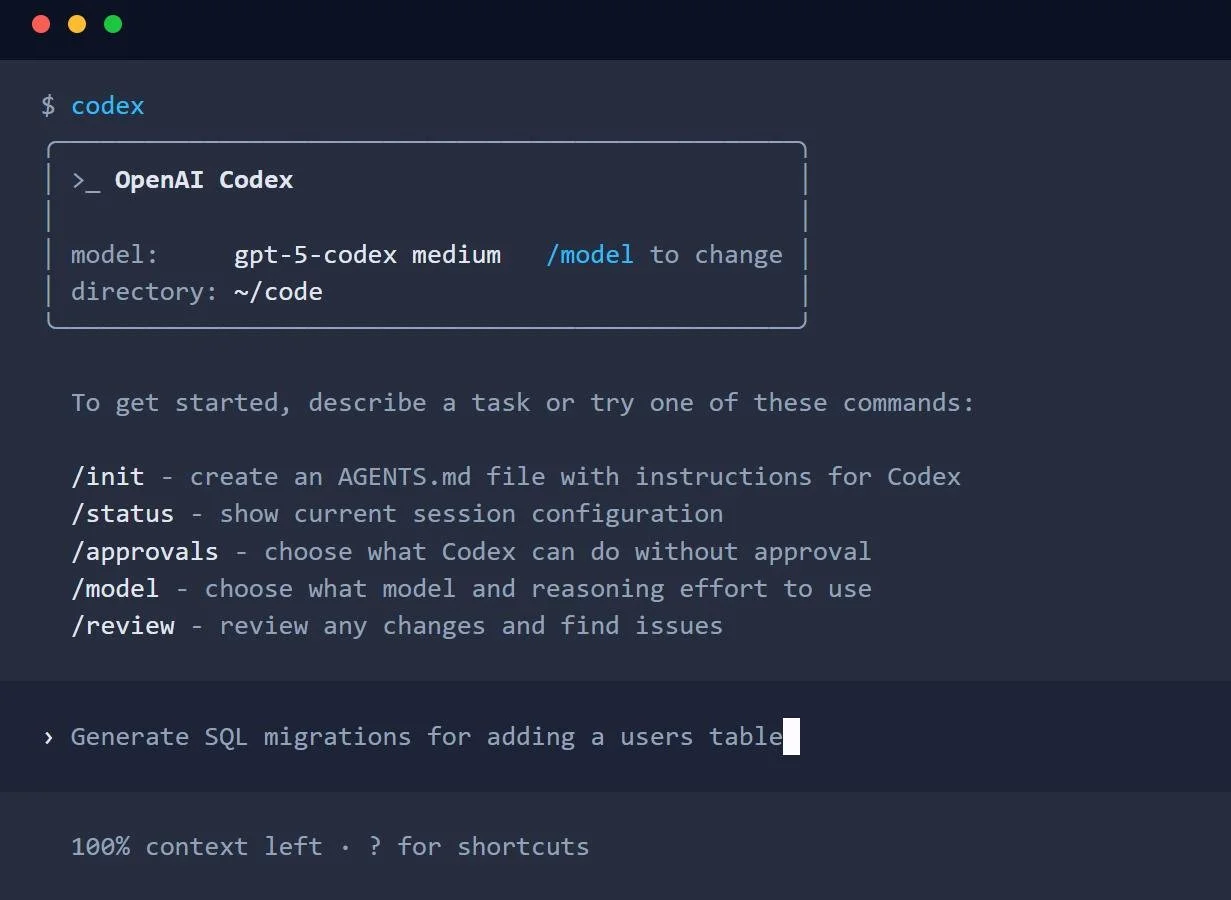
It can work with existing project files, understand code, suggest changes, and execute commands within its permitted environment.
Codex is available through several interfaces, including a command-line interface (CLI), development tools, desktop experiences, and cloud-based workflows, depending on account access.
For example, imagine you have a website project containing hundreds of files.
Rather than manually inspecting every page template for missing metadata, you could ask Codex to examine the project, identify potential issues, and propose corrections.
You would still need to review the findings and approve appropriate changes.
But much of the initial technical work could be delegated.
Explore the official Codex documentation.
What Is Claude Code?
Claude Code is Anthropic's agentic coding tool.
Like Codex, it can inspect project files, modify code, execute terminal commands, and work through complex development tasks.
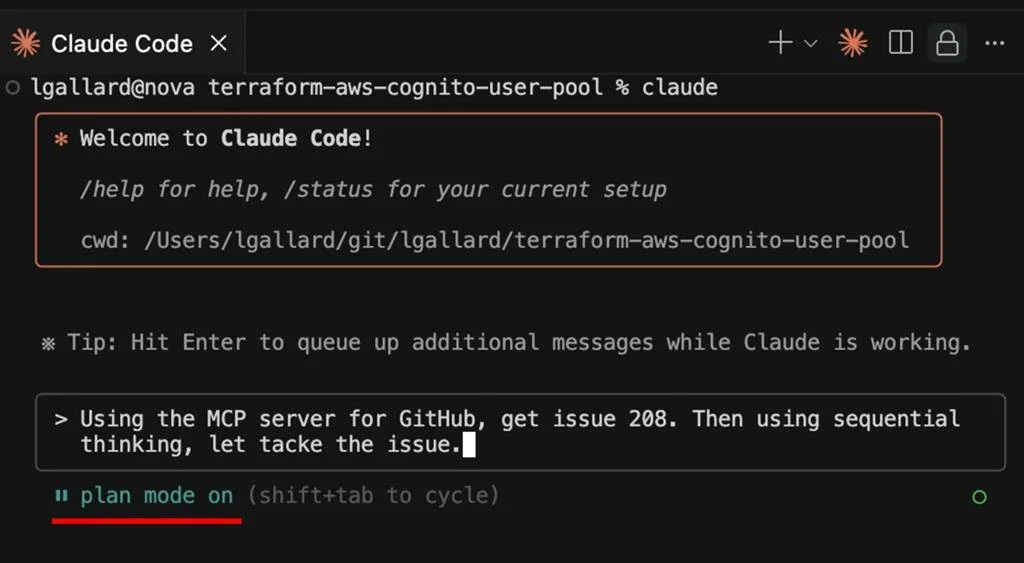
It can also interact with compatible tools and services through integrations, including the Model Context Protocol (MCP).
That means its usefulness isn't necessarily limited to files sitting on your computer.
With the appropriate integrations and permissions, Claude Code can participate in workflows involving external tools, repositories, and business data.
For example, you might ask it to inspect a website's structured data, identify inconsistencies, and prepare corrected markup.
Or you could use it to write a script that transforms an exported analytics report into a more useful format.
Explore the official Claude Code documentation.
How Are AI Agents Different From Chatbots?
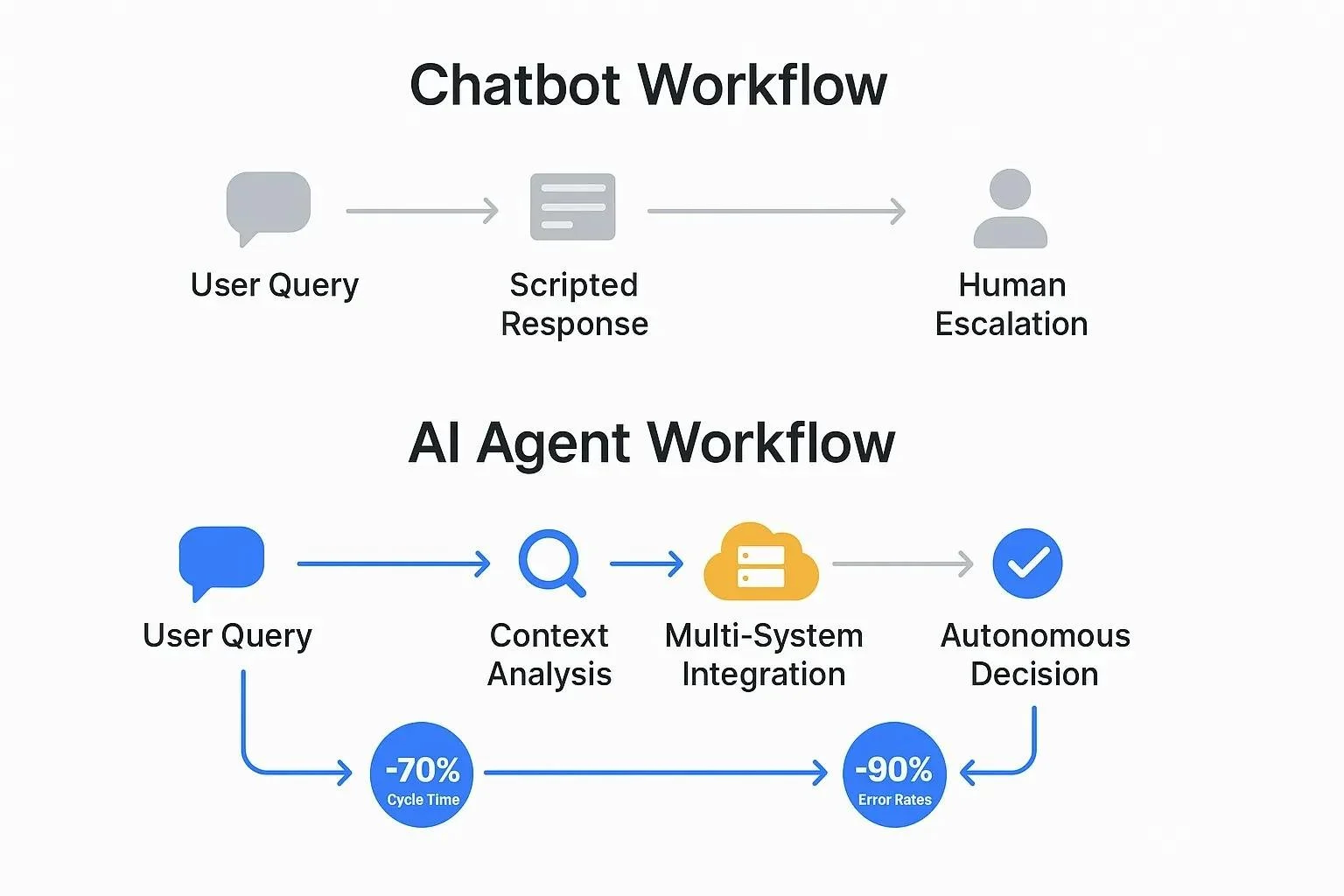
Think about the difference between asking someone for advice and hiring someone to complete a task.
A chatbot might explain how to fix a technical problem.
An AI agent can potentially inspect the relevant files, make the necessary changes, run tests, and report what happened.
Here's a simple example.
Chatbot request:
"How do I find missing title tags on my website?"
The chatbot explains the process, recommends tools, and perhaps provides code you could run yourself.
AI agent request:
"Review this website project for missing or duplicate title tags. Create a report identifying the affected pages and recommend fixes. Don't modify anything without my approval."
With access to the relevant project, an agent can work through those steps.
The distinction isn't absolute. Modern chat assistants can also use tools and perform actions when properly configured.
The meaningful difference is the working environment and the degree of authorized action.
And that's what makes coding agents interesting for businesses.
Codex vs. Claude Code: Side-by-Side Comparison
Both tools share many foundational capabilities.
The more useful question is how those capabilities fit your existing workflow.
SIDE-BY-SIDE COMPARISON
Codex vs. Claude Code
| Feature | OpenAI Codex | Claude Code |
|---|---|---|
| Developer | OpenAI | Anthropic |
| Primary purpose | Software development | Software development |
| Terminal interface | Yes | Yes |
| Project file editing | Supported | Supported |
| Command execution | Permission-based | Permission-based |
| Git workflows | Supported | Supported |
| MCP integrations | Supported | Supported |
| Automation | With appropriate setup | With appropriate setup |
| Pricing | Plan and usage dependent | Plan and usage dependent |
Capabilities depend on setup, permissions, and available integrations. This compares documented features, not independently tested performance.
The biggest takeaway? Neither tool has an exclusive claim on the capabilities that make AI agents valuable.
Both can help with technical projects. Both can work through multiple steps. Both can make mistakes.
And both require appropriate access, configuration, and oversight.
Pricing is another consideration.
OpenAI offers Codex access through eligible ChatGPT plans and other billing arrangements, with limits that vary by plan and usage.
Anthropic includes Claude Code in paid Claude plans and also supports usage-based API billing.
Because pricing, usage limits, and available features change, consult the current OpenAI pricing information and Claude pricing information before choosing.
What Can Codex and Claude Code Actually Do for a Business?
BEYOND CODING
What Can AI Agents Do for Your Business?
01
Technical SEO
Find metadata issues, inspect website files, and prepare prioritized fixes.
02
GEO Readiness
Review structured data, content architecture, and crawlable business information.
03
Marketing Reporting
Analyze exports, compare periods, and build repeatable reports.
04
Website Development
Update code, test changes, and prepare improvements for review.
This is where the conversation gets more interesting.
Most business owners don't need another tool for writing code.
They need help solving problems.
Coding agents can help with parts of those problems, particularly when the work involves files, structured information, or technical systems.
1. Website Audits and Technical SEO
Imagine managing a website with 150 pages.
Some have missing title tags. Others contain duplicate metadata. A few have broken internal links. Several use structured data that no longer matches the visible content.
Finding those issues manually takes time.
Codex or Claude Code could assist by examining available website files, running audit scripts, and organizing findings into a report.
A practical instruction might look like this:
"Audit this website project for missing title tags, duplicate meta descriptions, broken internal links, canonical-tag problems, and structured data errors. Produce a prioritized report. Do not modify any files."
The agent could identify issues that are detectable from the materials it can access.
But there's a catch.
Access to source code isn't the same as access to a live website, its server configuration, or its search performance.
A complete technical SEO audit may also require crawling the deployed site, reviewing Google Search Console, checking redirects, and evaluating rendered pages.
AI agents can accelerate that work.
They don't automatically replace the entire audit process.
2. GEO and AI Search Readiness
Generative Engine Optimization (GEO) focuses on improving how information about a business can be discovered, understood, and potentially referenced by AI-powered search systems.
It's closely connected to traditional SEO, but it raises additional questions about how clearly a website communicates its expertise, services, and relevance.
Both Codex and Claude Code can help analyze technical and structural aspects of a website.
For example, an agent could examine whether:
Important services have dedicated, accessible pages.
Structured data accurately describes the business.
Page headings and internal links communicate a coherent topic structure.
Important information is present in crawlable text.
Business names, descriptions, and service details are consistent across website files.
These checks complement the principles discussed in our guide to SEO vs. GEO vs. AEO.
But we need to distinguish technical readiness from actual AI recommendations.
An agent cannot guarantee that ChatGPT, Google AI Overviews, or another AI system will recommend your business.
Google's guidance for AI features in Search reinforces the importance of existing SEO fundamentals, including crawlability, helpful content, internal links, and accurate structured data.
There's no secret markup that guarantees inclusion.
A technically sound website is important.
So is a business that communicates clearly what it does, who it serves, and why someone should choose it.
3. Marketing Automation and Reporting
Let's say you export data from Google Search Console and Google Analytics every month.
You want to compare organic traffic, conversions, top-performing pages, and changes in search visibility.
A coding agent could help create a repeatable workflow to process those exports.
For example:
"Take these Search Console and GA4 CSV exports. Compare the current reporting period with the previous one, identify meaningful changes, and generate a summary with supporting data. Flag missing or inconsistent information."
With properly formatted data and an appropriate execution environment, either tool could help write and run scripts to accomplish that.
You could also develop workflows that connect to authorized APIs, prepare charts, or generate structured reports.
That doesn't mean the agent understands your business goals automatically.
A 20% traffic increase sounds encouraging.
But what if those visitors aren't potential customers?
What if conversions declined?
What if the traffic came from irrelevant searches?
An AI agent can help calculate what changed.
A marketing strategist still needs to determine what matters.
4. Website Updates and Development
Both Codex and Claude Code are designed for development work.
That makes website maintenance one of their most natural applications.
Depending on the platform and available access, they can help modify templates, update components, debug code, and test changes.
For example, an agency might ask an agent to:
"Update the website's FAQ component to improve accessibility, preserve the existing design, and verify that the change doesn't break other pages."
The agent could inspect the code, make changes, and run available tests.
But platform matters.
A custom-coded website offers different access than a hosted website builder.
Neither tool automatically gains control over every Squarespace, Shopify, or WordPress interface simply because you give it instructions.
Some tasks require APIs, repository access, additional integrations, or manual work.
Putting Codex and Claude Code to the Test
A FAIR COMPARISON
Putting Both Agents to the Test
Same project. Same instructions. Comparable access.
| Evaluation | What matters | Status |
|---|---|---|
| Accuracy | Correctly identified problems | Not tested |
| False positives | Incorrectly flagged issues | Not tested |
| Completeness | Important problems missed | Not tested |
| Usability | Clear, actionable findings | Not tested |
| Efficiency | Time and human intervention | Not tested |
Test status: This is a proposed methodology. No hands-on comparison has been completed, and no performance winner is claimed.
Rather than judging these tools by marketing claims, I would compare them using the same practical assignment.
Here's a test designed around a problem businesses actually face.
What Are the Limitations and Risks?
AI agents are capable, but they aren't independent experts.
They can misunderstand instructions, miss problems, make incorrect changes, or produce convincing explanations for flawed conclusions.
They also introduce access and security considerations.
Giving an agent permission to inspect a project is different from allowing it to modify production files, delete information, or access sensitive customer data.
Both platforms provide mechanisms for controlling permissions, but those controls need to be configured appropriately.
For business use, I'd start with read-only tasks and copies of projects.
Review findings before allowing modifications.
Use version control where possible.
Keep sensitive credentials and customer information protected.
And don't confuse a completed task with a verified result.
An agent reporting that something is fixed isn't the same as confirming that it works.
Which Should You Choose: Codex or Claude Code?
If you're already working inside OpenAI's ecosystem, Codex is a sensible place to start.
If your development workflow centers on Anthropic's tools, Claude Code deserves serious consideration.
For developers, the decision should come down to practical performance on their projects, integration requirements, workflow preferences, and cost.
For marketers and agencies, I'd focus on something different.
Which tool can reliably complete the specific tasks you want to delegate?
Can it inspect the files you actually use?
Can it connect to the appropriate systems?
Can it produce findings that are easy to verify?
And can you control what it's allowed to change?
For a business owner who doesn't work with code or technical files, neither terminal agent may be the best starting point.
A conventional AI assistant or a business-focused automation tool might be easier to adopt.
My recommendation: Don't choose an AI agent based on which company has the most impressive demonstration. Choose it based on the work you need done.
Frequently Asked Questions
What is the difference between Codex and Claude Code?
Codex is OpenAI's coding agent, while Claude Code is Anthropic's. Both can work with project files, modify code, execute commands, and support development workflows. Their differences include models, interfaces, integrations, pricing, and configuration.
Is Codex the same as ChatGPT?
No. ChatGPT is a general-purpose AI assistant. Codex is an agent designed primarily for coding and technical development tasks, although Codex can be accessed through supported ChatGPT-related experiences.
Do you need to know how to code to use Claude Code or Codex?
Not necessarily. Both accept natural-language instructions. However, technical knowledge helps with installation, configuring access, understanding errors, and verifying changes. Nontechnical users should begin with low-risk tasks.
Can Codex and Claude Code perform SEO audits?
Both can assist with technical SEO audits when provided with appropriate website files, crawling tools, or data. They can help identify metadata issues, structural problems, and code-related errors. A comprehensive audit still requires verification and access to relevant live-site information.
Can AI coding agents improve GEO?
They can help identify technical and content-structure issues that may affect search accessibility and clarity. However, neither tool can guarantee AI citations, recommendations, or higher visibility in generative search experiences.
Which is better for website development?
Both are built for software development. The better choice depends on the codebase, project complexity, integrations, model performance, and developer preferences. A controlled test on your own project is more informative than a universal ranking.
How much do Codex and Claude Code cost?
Costs depend on the provider, subscription, usage limits, and whether API billing is involved. Both companies maintain current pricing information on their official websites. Heavy usage may involve additional charges or limits.
Is it safe to give AI agents access to business files?
It can be appropriate with carefully configured permissions and human oversight. Start with limited access, protect sensitive data, review proposed changes, and avoid unrestricted production access unless the environment and risks are understood.
The Advantage Is Knowing What Work Matters.
There's a temptation to believe that the next AI tool will finally solve our marketing problems.
But faster execution doesn't automatically produce better outcomes.
An AI agent can help audit a website. It can't independently decide what makes your business worth choosing.
It can identify missing metadata. It can't replace the work of understanding your buyer, the problem they're trying to solve, and the moment they begin looking for help.
That's why we put so much emphasis on getting clear on your message.
Technology shouldn’t be a substitute for strategy.
Before you invest in another tool, make sure you understand what problem you're asking it to solve.
And if your website isn't producing the results you expect, start with a Website Performance Review.
Because doing more work isn't always the answer.
THE RIGHT WORK, NOT JUST MORE WORK
AI Can Help You Move Faster. But Toward What?
Before you automate your marketing, make sure your website clearly communicates who you help, what you solve, and why someone should choose you.
Explore the Website Performance Review
Author: Noah Swanson
Noah Swanson is the founder and Chief Content Officer of Type and Tale.